Microphone alarm system
Bird BoxThe Microphone alarm system is Tom’s proposed way to make the safe house’s warning network carry beyond the birds kept for that purpose. Malorie eventually finds and carries home microphones, amplifiers, cords, and a stand, hoping to give the household another means of detecting what approaches unseen. Its significance lies in that practical ambition—and in the uncertainty surrounding sound itself: it can mark movement, but it cannot always identify its source or tell the listeners whether danger is near.
Origin and Intended Use
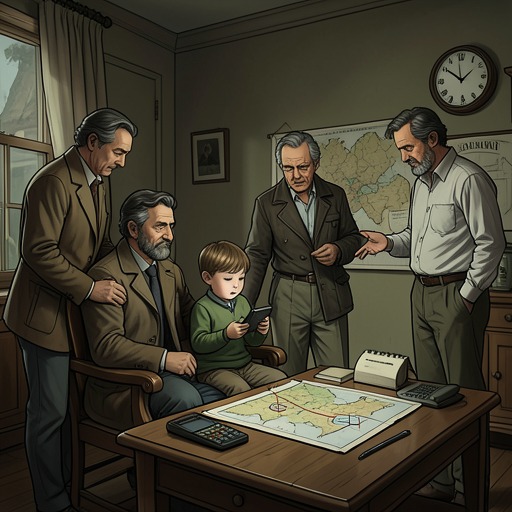
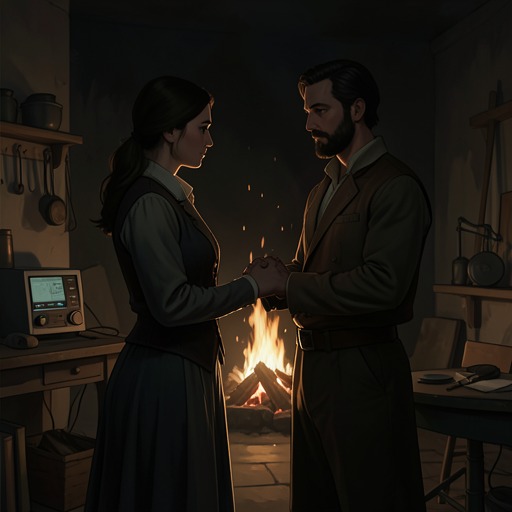
During Malorie’s first year alone with the newborn children, Tom’s voice repeatedly returns to her as a source of ideas, including proposals that the group had discussed but never carried out. One was to place microphones in the yard. The plan was an update to an alarm system that relied on birds: amplifiers would make the warning audible across the household’s surroundings. Malorie wanted the equipment, but the idea immediately raised a practical obstacle. She had to work out how to obtain microphones, amplifiers, and cords while caring for two babies and living under the restrictions of the disaster.
The system’s purpose is not to restore ordinary sight or make the outside world safe. It would instead extend the household’s ability to listen from behind its coverings, turning sounds from the yard into a possible warning. That distinction matters in a world where looking outside can be fatal: protection depends on gathering information without exposing the eyes. Tom’s proposal imagines a deliberate, human-made layer of listening alongside the birds, whose calls already function as an alarm.
Malorie’s Search and the Equipment
The search becomes a solitary expedition undertaken while Malorie is still physically recovering from childbirth. She paints the car windshield black, tapes socks and sweaters to the inside of the glass, and fastens blankets and mattresses to the bumpers with wood glue and duct tape. She does this blindfolded, in the street, despite the pain and exhaustion of caring for newborns. The improvised vehicle is part of the same survival logic as the alarm: movement and information are possible only when sight is blocked and other precautions are built by hand.
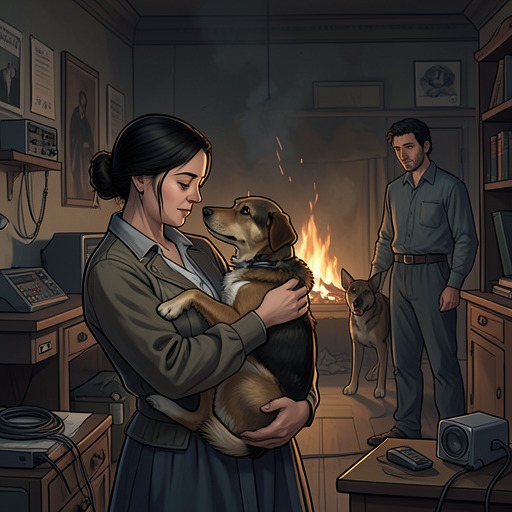
Malorie plans a route to a bar, leaving the babies behind and relying on Victor to protect them while she searches. At the destination, she reaches a stage and identifies the object she came for by touch: a microphone. As Victor is injured and struggling nearby, she follows a wire across the stage and discovers three more cords leading to three additional microphones. She gathers what she can carry: the amplifiers, microphones, cords, and a stand. The equipment is therefore not an abstract proposal but a tangible, salvaged collection obtained at serious personal cost, with Malorie forced to choose between continuing to gather supplies and returning to the two babies who need her.
Sound as Warning and Uncertainty
The broader soundscape explains why an amplified alarm seems valuable, while also exposing the limits of listening. On the river, Malorie hears birds singing, fish splashing, and animals moving amid the woods; she and the children hear a world they cannot safely see. She has trained the children from infancy to distinguish sounds, carrying them blindfolded to the edge of the woods and describing what they hear. The river becomes, in her image, an amphitheater for sound—but also a grave. Listening is necessary because danger may be hidden in the same environment as ordinary animal life.
A sound can signal presence without resolving what is present. Felix hears an unexplained sound for the third time and finally locates it inside the well, demonstrating how repeated listening can sharpen a source’s apparent direction without making the sound harmless. Later, while Malorie rows, the Boy hears what seems to be another person rowing in step with them. The echo suggests a follower, but the sound alone does not establish who it is or what they intend. Such moments make the alarm system’s purpose clear: it could alert listeners to change, but an alert would not necessarily provide an explanation.
The Warning’s Double Edge
The children’s practiced hearing is both a resource and a burden. Malorie needs them to listen into the trees, wind, and riverbanks because their attention can reach beyond her own. Yet on the river she worries that a child’s curiosity might lead him to remove his blindfold, and every splash can become an occasion for alarm. The system’s underlying principle—more sound, more awareness—therefore carries a risk: attention can detect what sight must avoid, but it can also intensify fear without supplying certainty.
The birds offer the sharpest example of a warning that can overwhelm. Near the end of the journey, the Girl says that she cannot hear because the birds above them are too loud. Malorie stops rowing and asks what the children hear. The birds’ calls, ordinarily useful as an alarm, have become so intense that they obscure listening rather than simply guide it. The passage does not establish that the microphones have been installed or that the salvaged equipment becomes a functioning system. Instead, it leaves the proposed technology within a larger, unresolved survival problem: sound can substitute for vision, but neither birds nor amplification can make an unseen world fully knowable.